

Lecture-11. Translation of humor and drama
Amaliy ishlar | Adabiyot



38
Mualliflik huquqi buzilgan holatdashikoyat qiling!
15 300 so'm
- Betlar soni:28 ta
- Fayl hajmi :47.99 KB
- Fayl turi:.docx
Mahsulot tavsifi
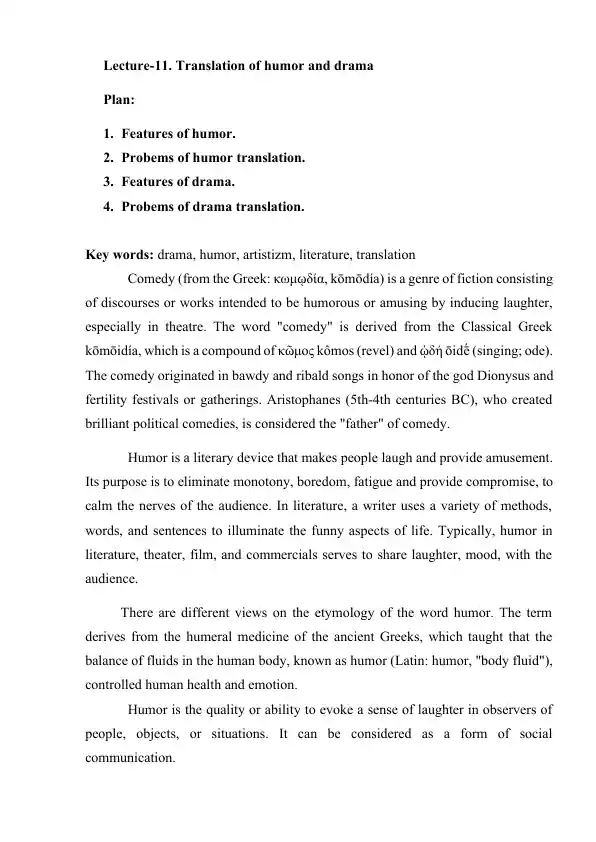
Comedy (from the Greek: κωμῳδία, kōmōdía) is a genre of fiction consisting of discourses or works intended to be humorous or amusing by inducing laughter, especially in theatre. The word "comedy" is derived from the Classical Greek kōmōidía, which is a compound of κῶμος kômos (revel) and ᾠδή ōidḗ (singing; ode). The comedy originated in bawdy and ribald songs in honor of the god Dionysus and fertility festivals or gatherings. Aristophanes (5th-4th centuries BC), who created brilliant political comedies, is considered the "father" of comedy. Humor, on the other hand, is a literary device that makes people laugh and provide amusement. Its purpose is to eliminate monotony, boredom, fatigue and provide compromise, to calm the nerves of the audience. In literature, a writer uses a variety of methods, words, and sentences to illuminate the funny aspects of life. Typically, humor in literature, theater, film, and commercials serves to share laughter, mood, with the audience. There are different views on the etymology of the word humor. The term derives from the humeral medicine of the ancient Greeks, which taught that the balance of fluids in the human body, known as humor (Latin: humor, "body fluid"), controlled human health and emotion.


Islam UZB
13077 ta
612 ta
Yuklanmoqda...
0 ta izoh